
Service and Circles
On gossip, sincerity, service leadership, kindness, resolutions.

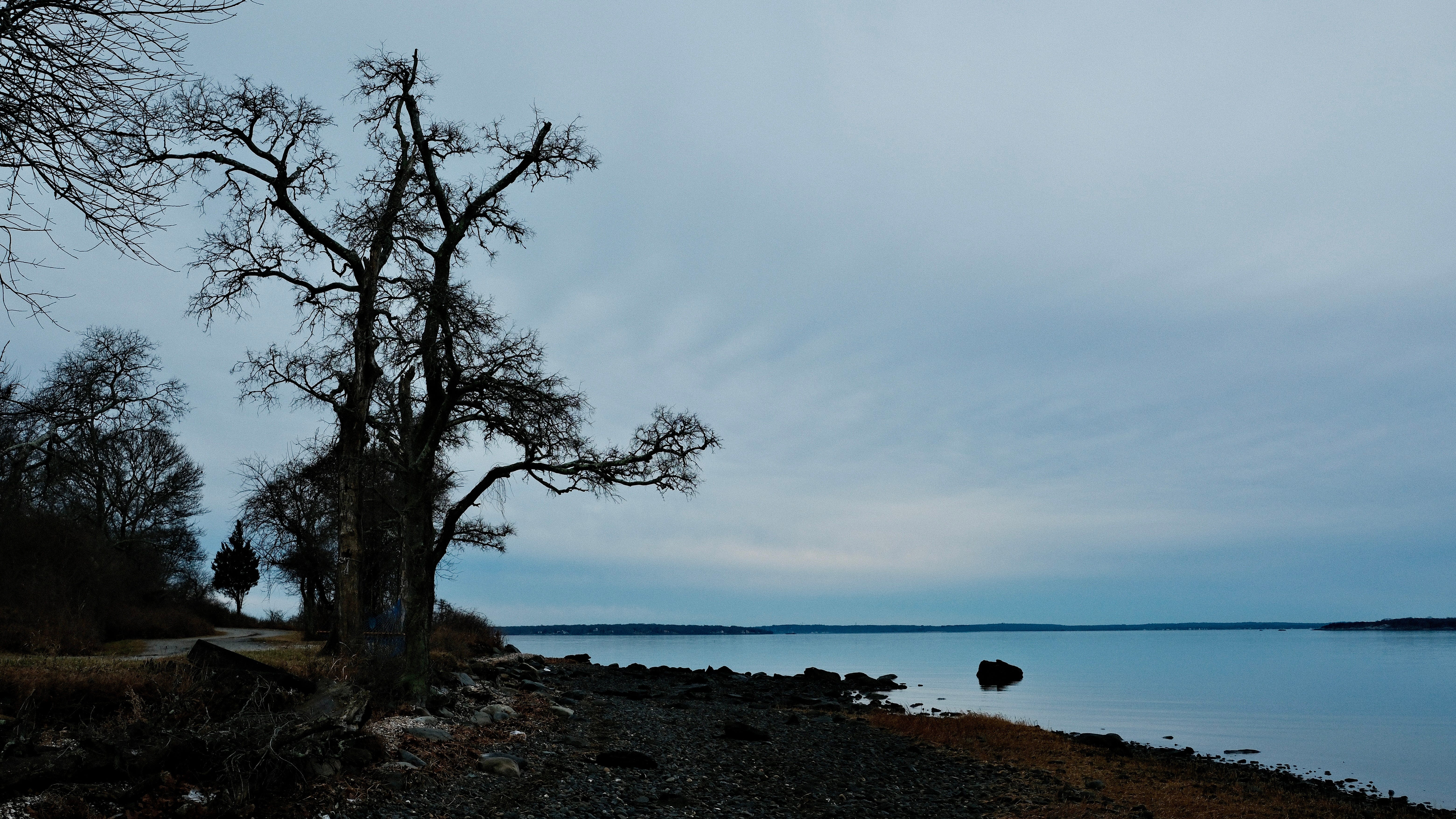
Cambridge, MA
I recently read that literary gossip end of year round up making its way around the internet and between laughing and cringing, the question that lingered for me was: where has the sincerity and kindness slunk away to in these dark dark times?
But that in itself is a cynical hot take. Sincerity and kindness is all around me, I just need to see it. Better yet, I just need to be it.
Amherst, MA — 2006
When I was an undergraduate design student, I witnessed one of our notorious professors tear into a graduate landscape architecture thesis during a team’s final presentation. Their design centered around a circular field in a mostly wooded park. As soon as they were done presenting, this notorious professor raised his hand, stood, and said, “You fundamentally misunderstand the concept of the circle.”
What he went on to say was that, at the scale they had designed the park, one wouldn’t have been able to experience or sense the circular nature of the field. Beautiful from above, but what would it be like to actually be there? Have you ever been lured to travel somewhere by beautiful drone footage of a place only to realize when you arrived that you’ll never see it from that perspective?
A causal loop diagram is a systems thinking tool to help visualize the interconnectedness of variables in a system. It tells a story. One variable either makes another variable go up or down, often “over time.” To mark the passage of time, one uses a simple double dash through a connecting line. It’s an effective and elegant way to make a system visible, to show cause and effect, and to identify leverage points to make change. I’ve used it in my work and taught it to design students hundreds of times. It’s essential, at times, to remove oneself from a dynamic to reframe it and to see it in new ways. This is how novels are revised—one needs to re-visualize it by taking a break, stepping away from the sentences, detaching. But, like the circular design those students drew so beautifully, staying outside or above for too long, is removed from the lived experience of whatever system one is trying to visualize. An outline, no matter how detailed, is not a manuscript written and read sentence by sentence.
I think at the scale of the internet, we fundamentally misunderstand the concept of the circle. We cannot experience the cyclical nature of time and events because we’re consuming information and experiencing things at a non-human scale. I mean this in all aspects of our humanness—physically, emotionally, spiritually—and also in all aspects of scale—time, space, light, weight, depth, etc. And at the rate at which we are receiving information, our understanding of time has changed, our expectations of others have changed—our willingness and capacity to be patient and empathetic and kind has changed.
I’m currently reading Strata, by Laura Poppick, in which she leads us through deep-time to explore four lesser known geologic stories of how Earth has changed over the last 4.5 billion years. Though the stories are of almost unfathomably massive systems and scale, she grounds us in ours, with her experience of finding bits of pottery on a beach in Maine and wondering where they came from—curious, tactile, human. What I love about it so far is that very early on, Poppick reminds us that the world is not happening to us, but rather we are of this world and this world is of us—our teeth and bones, our atoms vibrating, the blood pulsing through our veins is the world around us.
I’ve shared my theory before that no single group of humans has ever learned from another group of humans’ mistakes. I would love to be proven wrong, but I fear it to be true.
Both the Bay Area in California and Portland, OR are each due for a massive earthquake—any minute now, according to geologists. But it’s believed that San Francisco is more prepared than Portland because San Francisco has experienced a big earthquake within living memory and Portland has not. The earthquake in 1989 was one of the first televised natural disasters. Not only do plenty of people remember what it was like to live through it, there’s a video record of the damage. Portland simply does not have this. There’s a geologist nicknamed Dr. Doom who has made it his purpose to warn the city of what comes. My cousin, a renowned geologist who predicted the strength of the 2010 earthquake in Japan, moved to Oregon the same year we did and would not live in Portland. Articles and novels, imagined visceral experiences and scenarios have been published and shared in order to wake the population. Progress has been made through policy, but there is nothing that compares to lived experience. Nothing.
Ashland, OR — 2011
One of my greatest lessons in service leadership came when I was twenty eight years old and had the immense privilege of playing a minuscule part in one of the greatest feats of collaborative community based problem solving and ecological restoration this century, the removal of four dams and restoration of the Klamath River. As part of my job with the organization I worked for in Portland, OR, one of my senior colleagues and I drove four hours south to Ashland, OR to facilitate an important conversation amongst a group of stakeholders. And because it was so last minute, my colleague had no choice but to bring his nine month old son. We spent the night and prepared for the meeting the following day.
Now, being a father, I understand the heavy lift this was for my colleague. Back then it was a funny story of which I was the main character. This of course is far from the truth.
As we gathered around the long table at the restaurant the next morning with the group, a close partner of ours, a rancher in the basin (who had a one-eyed three-legged border collie, “the perfect speed…”) looked at me and said, “You might need to step in and take care of the baby if he starts to cry.” I chuckled, glancing at the baby rocking in his car seat. Just a few minutes later, when the baby did in fact start to wail, just as my colleague began to lead the meeting, she turned to me and mouthed, very clearly, “Take the baby.”
And that’s what I did. I promptly rose, picked up the very large nine-month old, left the restaurant, and soothed him for an hour and a half in my arms on the main street in Ashland. I missed the entire meeting, but I was doing my job, which was to support my colleague so he could lead the meeting.
In other words, it was not about me. I was a supporting character.
On the street, the baby and I were adorned with attention as it was the Friday just before Fathers Day. “Oh, how nice it is to see a young father,” one woman with long read braids said as she rubbed my back. “Happy Fathers Day,” countless others said as they passed by on the sun drenched street. I had no carrier or seat, but I grabbed a bottle and fed him in my arms. “Oh how old is he, fourteen months?” another woman asked. “No he’s only nine months, big boy huh?”
Even though I was proud and eager to be a part of this project, I don’t recall feeling frustrated that I was not in the meeting. I remember feeling nothing but present to the needs of this (huge) baby. Because all he needed in that moment was for someone to care for him. All he needed was my attention and some food and the safety I could provide him. That’s what my colleague needed of me. And that’s ultimately what, in that moment, that tiny blip within the massive effort that spanned decades of conversation and negotiation, countless meetings, buy in from thousands of stakeholders, federal and state approval, ups and downs, progress and setbacks, the river needed to one day run free again. I’m proud for that to be my minor contribution.
Cambridge, MA
So what of cynicism and sincerity, service and circles?
Just after the holidays, I found myself in a familiar place emotionally—low, untethered, moods out of my control. When I looked back at my journal, I was reminded that this happened almost exactly a year ago—same thing, same time, so much so that I have almost identical emails to my doctor sent one year apart asking to discuss ADHD medication. My photos app reminded me that almost thirteen years to the day, I went to a little town called Manzanita on the Oregon coast and put myself through what would be my first solo-retreat in order to check in, be present, and ultimately decide what came next. From this, I changed careers and set myself on a new path.
The poet in me wonders what it is about this time of year—the light, the darkness, the solstice, the cold aching world, that elicits this reflective tormented soul searching in me. The pragmatist in me wonders if I’m not getting enough vitamin D and exercise, or eating too much sugar. But why separate the two? I am both poet and pragmatist. I am an animal in a landscape. I am a soul searching.
And that’s what I’m ultimately getting at, I suppose.
My cynical hot take about the state of the publishing industry was in response to reading an entire article of cynical hot takes. I’m not saying, stop writing or reading gossip, it’s fun, but I am saying, it’s not all that’s out there and that for me, I need sincerity and beauty and kindness to feel hopeful and free.
And when I feel overwhelmed by the world’s woes and can’t get out of my own way, I try to remember that small acts of service are how we experience kindness and generosity and community and love. When I facilitate groups of people, the word trust comes up a lot. It’s near universal to want to feel trusted. But what that looks like in practice is up to interpretation for each person. A friend and colleague used to say, people aren’t greedy, they’re just needy. I believe this to be true… most of the time. There is greed and selfishness, of course, but if that all we see, that’s, well, all we see.
George Saunders speaks of kindness in those times in which he regrets rushing by the opportunity to practice it— too busy, too consumed, too self absorbed in whatever moment of whatever day. This rings true for me too. I think about the times I’ve ignored those people asking for money in the cold. I’m haunted by the times I’ve chosen comfort over kindness. I ache for the opportunity to go back and do better.
The world desperately, desperately, desperately needs more kindness. So I suppose this is a sort of resolution: to do better, to think about myself less, and do more for others. Spare a dollar, hold the door, stop and say hello, help when I can, let each act of kindness and generosity ripple out away from me. “Take the baby.”
-Caleb
I very much enjoyed this piece Caleb. Your line ....
"An outline, no matter how detailed, is not a manuscript written and read sentence by sentence." had me think of one of my favorite quotes from Gregory Bateson ...
"the map is not the territory".
This was such a beautiful read. Thank you.